Search This Blog

Thursday, 11 February 2010

Directors commentary...and don't they like to comment...

I have been listening to the Directors commentaries for several opening sequences of films...and from this I have learnt more about production of the films.
Here are some examples of comments from Directors about their films, which game me more insight into film making.


Mrs Henderson Presents
Director Stephen Frears talking. Quotes I collected from him about the opening...
"I went around for a year; asking if this was the kind of film which had an overture on it. When I was young films used to have overtures. After a year I realised the answer was yes. But of course if you have an overture, you have to have something on the screen, which I hadn’t allowed for in what I was shooting. So then we designed the sequence, and a wonderful Italian boy, a lot of young people made this sequence. Which always reminds me of March brothers films. Films made by Paramount in the 30’s."
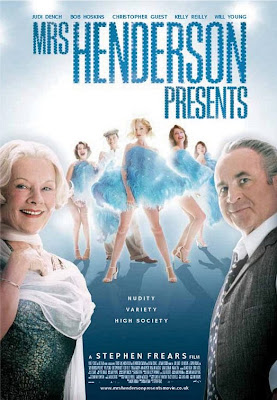
"The reason why I was asking the question about the overture, was that you could either say from the beginning it was the kind of musical, or of course, you could have done it as a drama which then half way through the musical bit started as a surprise."
"Oh I like this shot, it’s like, the opening of ‘Unforgiven’ a Clint Eastwood film."
"The reason it says inspired by true events was, there was always an argument about, whether the fact it was a real story was important or not. I of course in choosing to have those credits wanted the film to take place in a sort of place where musicals take place, which of course is a complete contradiction to real life."

Friday, 5 February 2010

Our preliminary video is ready!!!!!!...wooooooo!!!!!!

We have now created our preliminary piece of film, here it is:


Strength and Weaknesses from the preliminary


Strengths:

  • We used a variety of shots in the piece of flim. Different camera angles and shots were used. We discussed what shots we would use before filming, making it easier when it came to shooting and editing.
  • We made the piece look authentic by using appropriate costumes for characters and filming it in a realistic location.
  • We were able to create an interesting piece of film for the preliminary piece, which allowed us to practice skills we will need for the real piece.

Weaknesses:

  • We didn't add music to the piece, this is something we can improve in our real opening sequence. Music would have helped to create a better atmosphere.
  • We should have used less long shots and experimented with other types of shots.
  • Using a tripod would have insured the shots weren't shaky, unfortunately at the time of filiming, the tripods weren't available.

Every member of a group had an input into the editing and we had to make a decision of what clips to use and any transactions between the clips.

Here are some screen caps from our video:


Long Shot


Long Shot


Long Shot


Low-angled close up


Close-up/Mid-shot


Close-up looking straight at the camera


A mid shot


Wednesday, 3 February 2010

180 degree rule!!

There is a rule about 'crossing the line' which is about shooting consequtive shots from alternate sides. Through watching some youtube videos such as:


I was able to understand more about the rule...well considering I didn't know anything about it beforehand...that's not too hard, but that's beside the point...
In film making terms, the 180 degree rule is extremely important in providing continuity. When filming you must ensure the characters stay on the correct side and must have the same left/right.

Another aspect of the rule is that the nearer the 180 degree axis is to the camera, the closer the audience feel to a character and the POV for the audience is the same as the characters.


Thursday, 28 January 2010

Discussing the preliminary

Today we did more planning for our preliminary work, which we plan to shoot tomorrow.
We already have the storyboard:


Our preliminary will be filmed in an abandoned science block in our school, down a corridor. We can control the lighting easily here and we won't disturb people when filming because we will because nobody uses the building anymore. So it seems ideal. The plan is that Kay and my character will sit down at a table and have a secret conversation. I will demand that she follows my orders and I give her a key. Then the lights flicker on and we look down the corridor and nobody is there. Then we carry on the conversation and suddenly we look back and a man is standing there, having found them.

We have figured out the location we will shoot this 20 second bit of film, have discussed camera angles, costume, if any props are needing...

My character is a bully, and has terrorised Kay's character, to commit a criminal offence for her. Sam's character is vulnerable and frightened. We have used a hoody and dark make-up for my character, to try and create an 'ugly and violent' character, where as Sam wheres normal, every day clothes.

We aren't using many props, only: a table, two chairs and a key.

Oh yeeees, the script is sorted too...these are the lines:

Kay is sitting in the room. She glances at her watch and gets up to leave, just as Lucy walks in


L: Going somewhere? Scared?

K: Um...no...

Lucy walks in and they both sit down

L: Having second thoughts, are we?

K: Of course not, I just...

L: Nobody backs out of my business.

K: I didn't mean -

The lights tun on. They both get up and look down the corridor, but nobody is there. They turn away.

L: If you tell anyone about this, I will kill you.

There is a long pause and they tun to face the corridor, a man is standing there.

Wednesday, 27 January 2010

Ooooooh...Harry's on youtube!!!!!

I managed to find part of the opening 'Dirty Harry' sequence on youtube...(dead proud of myself by the way - can actually work youtube now -good stuff). Anyway here is a link to the video and some opinions from a few people who have commented on the vid :D
www.youtube.com/watch?v=pkMlGARPsxk

Good old Harry.


At the beginning of the schooling year, I watched various opening sequences of films, including...'Dirty Harry'


Here is my textual analysis for 'Dirty Harry' in this I have discussed a variety of media terminology


Analyse the opening sequence of ‘Dirty Harry’ (1971) using the framework...
The opening sequence of the cop-thriller, Dirty Harry, includes a variety of camera shots, angles and movements along with skilfully arranged editing, music, sound, lighting, ideology, mise-en-scene, representation, dialogue and production design to showcase the film to the viewer to generate interest right from the start.
We are firstly transmitted an image, where the camera zooms in to the words ‘In tribute to the police officers of San Francisco who have their lives in the line of duty’, this establishes where the location of the film is and the non-diegetic sound of the church bells create a melancholy atmosphere to these words, insinuates a theme of loss and mourning and conditions our expectations for some poignant occurrences in the film. The writing combined with the sound helps the viewer to comprehend who we are meant to support in the film - the ‘Cops’.
Next we view a slow dissolve to an image of a shining police badge which stays central to the screen appears, whilst the camera scroll down a list of names and dates of people who have been killed whilst working as police officers, this is set on a grey background, representing a gravestone, which could be seen as a sign of respect and a tribute to these police officers. The amount of names displayed, saddens us and makes us wonder whether it maybe foreseeing the outcome of someone in the film we are about to watch.
This fades and dissolves, and a soundtrack begins to play. It is modern, tense and feels abnormal; drums and symbols can be distinguished amongst the sound. We then view footage of a gun in at an interesting angle, it isn’t pointing directly at us which makes it less intimidating for the viewer, and however it is clearly aiming at a potential victim. We can also establish how the low angle of the camera has been used to purposely obscure the shooters face. The Director has used mise-en-scene with this, hoping to create a sense of mystery and ambiguity.
We see the view of the shooter; he is aiming at an attractive woman in a bright yellow swimming costume near a swimming pool. She is being followed by the snippier riffle; the camera pans her movements as we are shown medium shots as she dives into the swimming pool.
The camera zooms out slowly to show an overview of the city, the extreme wide shot is used as an establishing shot to show the location, whilst film an over the shoulder shot of the shooter places the two characters into context with each other. The over the shoulder shot once again means we are only able to see the back of the man firing the gun and not the face which increases tension and suspense. We then cut back to the camera panning the woman, swimming in the pool.
Suddenly – for a fraction of a second – we see a close-up of the trigger being pulled, and then there is a long shot of the girl drowning in the pool.
We then cut to a man named Harry, walking up some steps, then he pauses in front of the camera, so we can admire him and to show he is protagonist of the film. The title ‘Clint Eastwood’ in bright yellow writing appears on the screen. The lack of emotion on his face, despite the close-up, helps to represent him as ‘tough’ and not easily broken down. Eastwood is renowned for being a ‘cool’ guy and at the time the film was created most would associate him with this, many women liked him, whilst plenty of men wanted to be like him. Through the costume and appearance: shades, expensive suit, well-groomed, posh jacket, we receive a clear message on how the director is trying to portray the masculinity character to the viewer. Harry is a stereotyped character of a promoted detective.
The words ‘Dirty Harry’ appear on the screen. The words ‘Dirty’ is in orange which is an alternate colour to use, compared to the yellow colour scheme of all the other names. This amplifies the word, and expresses the contamination in its meaning.
The detective and Harry our captured in a two-shot, as Harry walks around the swimming pool, then stops at the body, near the detective. He purposely looks up at the sky scrapper the killer had aimed from.
Next we get a cut to Harry walking down the road, the camera pans his movement, the stops and tilts upwards slowly to show the sky scrapper, whilst more names appear on the bottom of the screen. The music has changed since Harry appeared and we are now presented with a funky track, this helps to influence our perception of the character – helps to make him ‘cool’. We see him climb us stairs and hear the diegetic noise of a fan; the fan is angled in a low shot. The fan also implies the hot weather in San Francisco, and what people there require to cool down.
The camera then pans Harry walking around a roof top. We are given a wide-angled shot, so we are able to see the city surrounding the building, giving the idea of the grandness and scale of the city. We are able to distinguish that it is actually the place where the killer was standing earlier, it establishes his flair as a detective. We see Harry find the bullet, then there is a close-up of the bullet, so we can see it clearly, as he places it in a bad.
The Director decided not to have a voice over, so we pay more attention to the action in the film, and it helps to create the require suspense. The only dialogue in the opening sequence is ‘Jesus’, when he finds a later, this is effective, as it shows us dialogue is about to begin.

Tuesday, 26 January 2010

Meanings in Media...

Northallerton College provided us with good clear, yet detailed explanations of terms used when making films.

Camera Shots

"Close-up In the close-up shot, a certain feature or part of the subject takes up most of the frame. A close up of a person usually means a close up of their face (unless specified otherwise).Close-ups are obviously useful for showing detail and can also be used as a cut-in.A close-up of a person emphasizes their emotional state. Whereas a mid-shot or wide-shot is more appropriate for delivering facts and general information, a close-up exaggerates facial expressions which convey emotion. The viewer is drawn into the subject's personal space and shares their feelings."

"Mid-shot The mid shot shows some part of the subject in more detail, whilst still showing enough for the audience to feel as if they were looking at the whole subject. In fact, this is an approximation of how you would see a person "in the flesh" if you were having a casual conversation. You wouldn't be paying any attention to their lower body, so that part of the picture is unnecessary.
The MS is appropriate when the subject is speaking without too much emotion or intense concentration. It also works well when the intent is to deliver information, which is why it is frequently used by television news presenters. You will often see a story begin with a MS of the reporter (providing information), followed by closer shots of interview subjects (providing reactions and emotion).
As well as being a comfortable, emotionally neutral shot, the mid shot allows room for hand gestures and a bit of movement.
"

"Long-shot/Wide-shot In a long shot, when referring to a person, a long shot means they take up almost the full frame height.In other situations it means a wide shot of the whole scene, placing the subjects in their environment. "

"Two-Shot There are a few variations on this one, but the basic idea is to have a comfortable shot of two people. Often used in interviews, or when two presenters are hosting a show. A "One-Shot" could be a mid-shot of either of these subjects. A "Three-Shot", unsurprisingly, contains three people.
Two-shots are good for establishing a relationship between subjects. If you see two sports presenters standing side by side facing the camera, you get the idea that these people are going to be the show's co-hosts. As they have equal prominence in the frame, the implication is that they will provide equal input. A two-shot could also involve movement or action. It is a good way to follow the interaction between two people without getting distracted by their surroundings.
"

Angles

"High Angle A high angle shows the subject from above, i.e. the camera is angled down towards the subject. This has the effect of diminishing the subject, making them appear less powerful, less significant or even submissive."

"Low Angle This shows the subject from below, giving them the impression of being more powerful or dominant."

"Eye-Level This is the most common view, being the real-world angle that we are all used to. It shows subjects as we would expect to see them in real life. It is a fairly neutral shot."

"Bird's Eye The scene is shown from directly above. This is a completely different and somewhat unnatural point of view which can be used for dramatic effect or for showing a different spatial perspective.
In drama it can be used to show the positions and motions of different characters and objects, enabling the viewer to see things the characters can't.
The bird's-eye view is also very useful in sports, documentaries, etc.
"